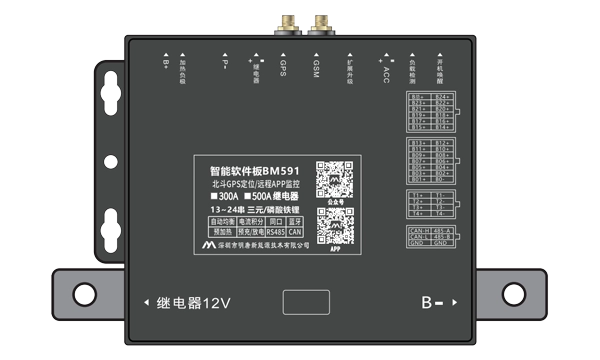
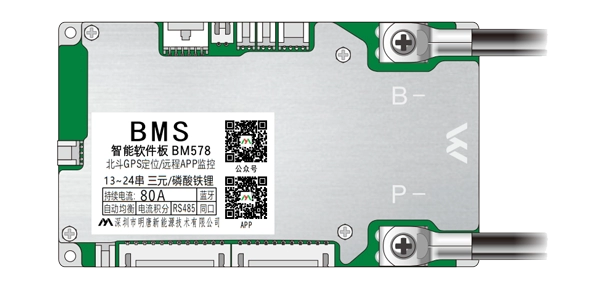
In electric two-wheel vehicles, performance is not defined solely by motor power or battery capacity. Riders and operators experience performance through consistency—how predictable acceleration feels, how stable range estimates are, and how reliably the vehicle behaves across different riding conditions.
Behind this consistency is a layer of control logic that governs how energy is stored, released, and protected. This layer is the BMS for 2 wheelers. Rather than being a passive safety component, the battery management system actively shapes how usable energy is delivered throughout daily operation.
This article examines BMS for 2 wheelers from the perspective of energy utilization and operational consistency, focusing on how it influences efficiency, reliability, and system-level behavior in real-world use.
Energy Utilization Is Not the Same as Battery Capacity
Two electric two-wheelers may use identical battery cells and have the same nominal capacity, yet behave very differently on the road. One may feel smooth and predictable, while the other feels inconsistent or abruptly limited under load.
The difference often lies in how energy is managed rather than how much energy is stored.
A BMS for 2 wheelers determines:
How much of the stored energy is accessible at any given moment
How discharge limits change with temperature and load
How deeply the battery is allowed to operate within safe margins
In practice, the BMS plays a direct role in translating nominal battery capacity into usable riding energy.
Why Energy Consistency Matters More in Two-Wheelers
Two-wheel electric vehicles operate under rapidly changing conditions. Speed varies frequently, loads change with terrain, and rider input is continuous rather than steady. Unlike larger EVs, two-wheelers have minimal energy buffering.
Because of this, small variations in battery behavior become noticeable to the rider. A well-calibrated BMS for 2 wheelers reduces these variations by managing energy flow in a controlled and predictable manner.
From an engineering perspective, the goal is not to maximize output at all times, but to maintain stable behavior across:
The Role of BMS in Managing Discharge Behavior
Regulating Power Availability
During operation, the motor controller requests power based on rider input and vehicle logic. The BMS evaluates whether the battery can safely supply this power under current conditions.
A BMS for 2 wheelers continuously adjusts discharge limits based on:
This regulation ensures that power delivery remains smooth and controlled rather than abrupt or unpredictable.
Preventing Deep Stress on Individual Cells
In series-connected battery packs, weaker cells can limit overall performance. If unmanaged, these cells may reach critical voltage thresholds earlier, forcing the system to reduce output or shut down.
Through cell-level monitoring, a BMS for 2 wheelers helps prevent localized overstress, allowing the battery pack to behave as a unified energy source rather than a collection of mismatched cells.
Charge Management and Its Impact on Daily Use
Charging behavior has a direct influence on how consistently a two-wheeler performs over time. In real usage, batteries are rarely charged under ideal conditions or to exactly the same level every time.
A BMS for 2 wheelers manages this variability by controlling charging current and voltage while accounting for cell balance and temperature.
In practice, this leads to:
More stable state-of-charge readings
Reduced variation in available range
Lower cumulative stress on the battery pack
Rather than accelerating charging, the BMS focuses on maintaining repeatable charging outcomes.
Temperature Awareness as an Energy Management Tool
Temperature affects both how much energy a battery can deliver and how efficiently it can be charged. Two-wheelers often lack active thermal management, making temperature awareness especially important.
A BMS for 2 wheelers integrates temperature data into its energy control logic. Under high thermal load, it may limit discharge power. Under low temperatures, it may restrict charging or adjust output behavior.
These actions are not designed to optimize performance metrics, but to maintain consistent operation and protect long-term battery health.
Communication Between BMS and Vehicle Control Systems
Energy consistency is achieved through coordination between subsystems. The BMS does not operate in isolation; it continuously exchanges data with other controllers.
A BMS for 2 wheelers typically communicates:
Available power limits to the motor controller
Battery status information to the vehicle control unit
Diagnostic data to displays or service tools
This communication allows the vehicle to adapt its behavior dynamically, smoothing transitions and reducing unexpected changes in performance.
Influence of BMS Calibration on Rider Perception
From the rider’s perspective, the BMS influences how the vehicle feels rather than how it is specified. Poor calibration can result in sudden power reduction, inaccurate range estimates, or inconsistent acceleration.
A properly tuned BMS for 2 wheelers contributes to:
Gradual and predictable power limiting
Stable dashboard indicators
Reduced discrepancy between expected and actual range
These characteristics improve rider confidence even when operating conditions vary.
Integration Considerations for Manufacturers and OEMs
For OEMs and battery pack builders, integrating a BMS for 2 wheelers involves aligning electrical, mechanical, and software aspects of the system.
Key integration factors include:
Matching protection thresholds to motor characteristics
Ensuring compatibility with vehicle communication protocols
Designing harnesses and connectors for compact layouts
Accounting for vibration and environmental exposure
Because two-wheelers offer limited installation space, integration quality often affects system reliability as much as component selection.
Application-Specific Energy Management Needs
Urban Commuting Vehicles
In urban use, energy efficiency and repeatability are critical. A BMS for 2 wheelers in this scenario prioritizes stable behavior across frequent short trips and partial charging cycles.
High-Load or Performance-Oriented Vehicles
Performance-focused two-wheelers require higher discharge capability. The BMS must support elevated current levels while maintaining precise protection logic to avoid instability.
Commercial and Fleet Operations
For delivery and shared mobility fleets, consistency across vehicles is essential. A BMS for 2 wheelers helps standardize behavior, making performance more predictable across large numbers of units.
Reliability as a System-Level Outcome
Energy-related reliability issues often stem from cumulative stress rather than single events. A BMS works continuously to manage these stresses before they become visible failures.
By coordinating electrical, thermal, and communication functions, a BMS for 2 wheelers helps ensure that daily operation remains within defined limits, reducing unexpected downtime and maintenance issues.
Practical Evaluation Criteria for BMS for 2 Wheelers
When selecting a BMS, professional buyers typically evaluate:
Accuracy of sensing and control logic
Stability under dynamic riding conditions
Communication reliability
Proven consistency in real operating environments
Rather than focusing solely on maximum ratings, evaluation emphasizes how well the BMS supports predictable system behavior.
Conclusion: BMS as the Driver of Consistent Two-Wheeler Performance
In electric two-wheelers, performance is ultimately measured by how consistently energy is delivered rather than by nominal specifications. A BMS for 2 wheelers plays a central role in shaping this consistency by managing discharge behavior, charge control, and system coordination.
By translating stored energy into predictable and usable power, the BMS supports reliable daily operation across a wide range of applications. For manufacturers, integrators, and fleet operators, understanding the practical role of BMS is essential to building two-wheeler systems that perform as expected in real-world conditions.