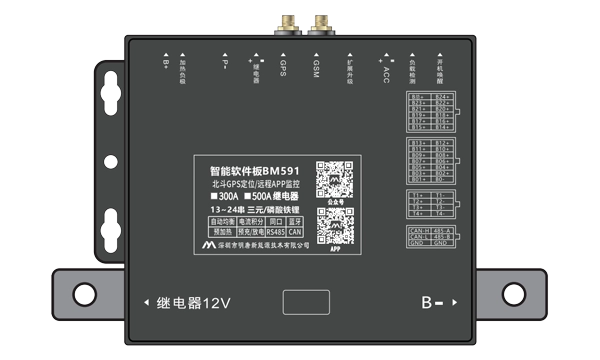
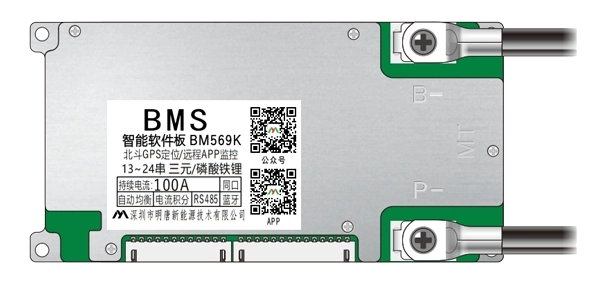
Automated Guided Vehicles (AGVs) have become essential assets in manufacturing, logistics, warehousing, and smart factory environments. They enable continuous material transportation with precision, efficiency, and reduced labor dependence. Yet, as AGVs evolve with heavier workloads, longer duty cycles, and multi-shift operations, one element has become mission-critical to their performance: the AGV battery management system. Battery performance directly determines AGV uptime, load handling capability, operational life, and overall productivity. Without an intelligent AGV battery management system, even the most advanced navigation or robotics technologies cannot sustain reliable operations. This system serves as the command center for monitoring battery status, balancing cell performance, ensuring safe charging, and optimizing energy utilization.
The Role of an AGV Battery Management System in Autonomous Logistics
Automated Guided Vehicles (AGVs) rely entirely on battery power to perform navigation, load handling, and communication tasks. Any instability in voltage, temperature, or charging behavior can interrupt automated workflows and reduce overall system efficiency. An AGV battery management system plays a central role in maintaining reliable power delivery by continuously supervising battery health and operating conditions.
By integrating embedded hardware, intelligent algorithms, precision sensors, and real-time communication modules, the AGV battery management system acts as the “brain” of the battery pack. It ensures safe charging and discharging, balances individual cells, and prevents failures caused by overheating or overvoltage. Whether AGVs are deployed in cold-chain logistics, high-temperature production lines, or high-throughput warehouses, a robust AGV battery management system enables uninterrupted mobility and dependable autonomous transportation.
Why Industrial Automation Depends on a Robust AGV Battery Management System
Modern industrial automation demands accuracy, continuity, and real-time responsiveness. AGVs are expected to operate autonomously with minimal human intervention, making battery reliability a mission-critical factor. A high-performance AGV battery management system ensures that power-related issues never become a bottleneck in automated operations.
Ensuring Safety in High-Demand Environments
Industrial facilities often involve intensive duty cycles, fast charging requirements, and fluctuating load demands. Without continuous monitoring, batteries may overheat, overcharge, or experience internal faults that pose safety risks. The AGV battery management system constantly tracks temperature, voltage, and current, activating protective mechanisms when abnormal conditions occur. This proactive safety control protects both the AGV hardware and the surrounding operational environment.
Maximizing Battery Lifespan
Battery replacement is one of the most significant long-term costs in AGV fleets. An advanced AGV battery management system optimizes charging behavior and maintains cell balance, preventing stress caused by deep discharge or uneven cell aging. By ensuring each cell operates within safe limits, the system significantly extends battery lifespan and improves return on investment for automation projects.
Optimizing Energy Efficiency
Energy efficiency directly influences productivity and operating costs. The AGV battery management system analyzes real-time power consumption and adapts energy usage to match workload intensity. This intelligent energy regulation allows AGVs to operate more smoothly, reduce unnecessary power loss, and maintain consistent performance throughout each shift.
Supporting Multi-Shift and 24/7 Operations
Many logistics centers and manufacturing plants operate continuously. In such environments, predictable battery performance is essential. A reliable AGV battery management system enables fast opportunity charging, accurate state-of-charge estimation, and stable power output, allowing AGVs to complete long routes, manage heavy payloads, and recharge efficiently during scheduled breaks.
Key Benefits of Using an AGV Battery Management System
A professionally engineered AGV battery management system enhances not only battery safety but also overall fleet efficiency and system intelligence.
Improved Operational Reliability
Unexpected battery failures can halt production lines and disrupt warehouse throughput. With real-time monitoring, fault detection, and early warning alerts, the AGV battery management system minimizes unplanned downtime and ensures stable fleet operation under demanding conditions.
Increased Battery Efficiency and Operating Range
By optimizing power distribution and reducing energy waste, the AGV battery management system extends each vehicle’s usable operating time. This allows AGVs to complete more tasks per charge, travel longer distances, and maintain consistent output across varying workloads.
Enhanced Fleet Coordination
When battery data is shared with fleet management platforms, task scheduling becomes more intelligent. The AGV battery management system provides accurate battery status information, allowing software to assign missions based on remaining energy and charging availability, preventing power loss during critical routes.
Reduced Maintenance Costs
Predictive diagnostics enable maintenance teams to identify early signs of battery degradation. The AGV battery management system supports condition-based maintenance, reducing emergency repairs, avoiding premature battery replacement, and lowering total maintenance costs.
Consistent Performance Across Harsh Environments
AGVs frequently operate in challenging environments such as cold storage facilities, dusty factories, or high-humidity warehouses. A well-designed AGV battery management system ensures stable electrical performance despite environmental stress, maintaining reliable operation and protecting battery integrity over long service periods.
Conclusion
In modern industrial automation, a AGV battery management system is not an optional enhancement—it is a foundational requirement for safe, efficient, and intelligent AGV fleet operation. By ensuring consistent energy availability, protecting battery health, reducing downtime, and enabling predictive maintenance, this system becomes the heartbeat of automated material handling workflows.
Facilities that integrate a high-quality AGV battery management system benefit from stronger operational reliability, longer battery lifespan, improved fleet coordination, and lower long-term costs. For any business seeking seamless automation and continuous productivity, investing in an advanced AGV battery management system delivers measurable value and long-lasting performance.