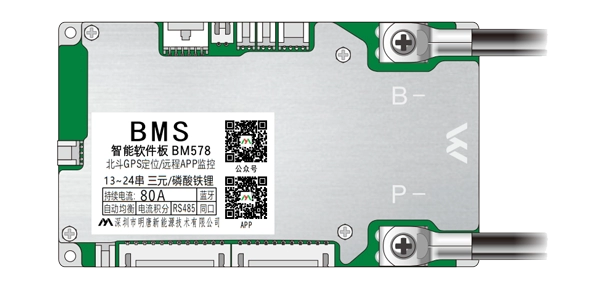
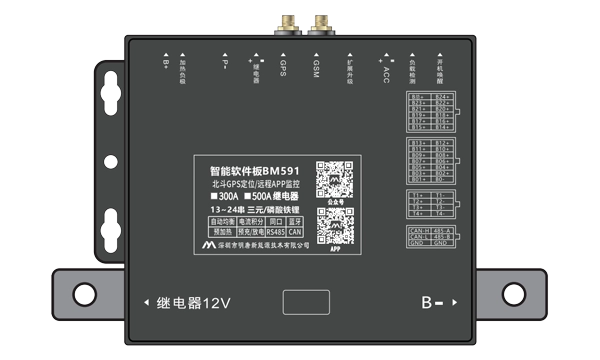
As battery-powered mobility and portable energy solutions expand worldwide, the battery rental replacement model is becoming a transformative service framework. Users can replace depleted batteries at dedicated swapping stations instead of waiting for long charging cycles, improving productivity and operational continuity. At the heart of this business model lies the intelligence that makes fast, safe and traceable energy exchange possible — the BMS for battery rental replacement.
A high-performance Battery Management System ensures that every removable battery used across fleets, logistics equipment, scooters, and industrial assets operates safely, remains traceable, meets rental standards, and delivers reliable long-term value to service providers. This article Mingtang explores how a dedicated BMS for battery rental replacement shapes operational performance, business profitability, and service-level excellence.
Why Battery Rental Replacement Requires a Specialized BMS
Battery swapping sounds simple — remove, replace, continue operating. However, the engineering challenges behind this service are far more complex than fixed-pack usage. A BMS for battery rental replacement must ensure:
Guaranteed safety during frequent physical handling
Strict health validation before each reuse
Cross-compatibility with various hosts, chargers, and swapping stations
Traceable lifecycle history for risk control and billing management
Secure identity authentication for anti-theft and unauthorized swapping prevention
The business depends on fast turnover, minimal downtime, and high reliability — all of which depend on precise BMS control and monitoring.
Core Functions of BMS for Battery Rental Replacement
To enable truly seamless and scalable battery swapping operations, an advanced BMS for battery rental replacement must act as the central intelligence hub that bridges battery hardware, embedded control algorithms, and cloud-based operational platforms.
Unlike conventional BMS designs used in privately owned EVs, rental-based systems operate under high-frequency swapping, diverse user behavior, and unpredictable environments. This requires the BMS not only to monitor battery parameters, but also to actively govern safety, usage rights, lifecycle value, and asset traceability across the entire rental ecosystem.
A well-designed BMS for battery rental replacement becomes the foundation for safe operations, high utilization rates, and sustainable business profitability.
Safety Governance for High-Frequency Use
Battery rental systems are continuously exposed to repeated insertion and removal, vibration, accidental impacts, temperature fluctuations, and varying charging infrastructures. In such high-stress scenarios, safety must be enforced at the system level rather than relying on user behavior.
A professional BMS for battery rental replacement must therefore implement multi-layer protection mechanisms, including:
Over-voltage and under-voltage protection to prevent cell damage during fast charging and deep discharging
Over-current and short-circuit protection to handle sudden load changes and external faults
Thermal runaway prevention, combining real-time temperature sensing with predictive thresholds
Insulation resistance monitoring for high-voltage battery architectures used in commercial and industrial equipment
Mechanical stress and aging risk assessment, derived from long-term temperature gradients and impedance evolution
By embedding these safeguards directly into the BMS for battery rental replacement, operators can ensure safe handling, minimize accident risks, and maintain compliance even under intensive daily usage.
SOH & SOC Accuracy to Maximize Revenue Utilization
In battery rental and swapping models, each battery pack is shared by multiple users and often completes several charge–discharge cycles per day. Inaccurate estimation directly translates into lost revenue, customer complaints, or premature battery retirement.
An advanced BMS for battery rental replacement must deliver highly reliable state estimation across multiple dimensions:
State of Charge (SOC): ensuring that every swapped battery meets guaranteed range expectations, avoiding disputes and service degradation
State of Health (SOH): accurately tracking capacity fade, internal resistance growth, and aging patterns
Remaining Useful Life (RUL): forecasting when a battery should be reassigned, refurbished, or retired
High-precision algorithms within the BMS for battery rental replacement allow operators to extract maximum usable value from each battery, while maintaining consistent user experience and predictable asset depreciation.
Intelligent Cell Balancing for Long-Cycle Operation
Frequent deep cycling and partial charging accelerate cell imbalance in rental battery packs. Without proper management, this imbalance leads to reduced capacity, localized overheating, and early derating of the entire pack.
A robust BMS for battery rental replacement must implement intelligent balancing strategies that adapt to operational demands:
Support for active or passive cell balancing, depending on system efficiency and cost requirements
Optimization of balancing timing to minimize extra heat generation during charging or standby
Continuous consistency monitoring to prevent weak cells from limiting overall pack performance
By maintaining uniform cell behavior, the BMS for battery rental replacement significantly extends service life, reduces maintenance interventions, and increases the total number of profitable rental cycles.
Communication & Authentication with Swapping Ecosystem
Battery swapping is not just a hardware exchange—it is a digitally authenticated transaction involving users, stations, and centralized management systems.
A dedicated BMS for battery rental replacement must seamlessly integrate into the broader ecosystem, supporting communication with:
Mobile host vehicles or devices
Automated swapping cabinets and kiosks
Centralized cloud operation and billing platforms
Key capabilities include:
Multi-protocol communication such as CAN, RS485, Bluetooth, and LTE
Encrypted data exchange to prevent tampering and unauthorized access
Unique battery ID binding for anti-theft, ownership verification, and usage tracking
Real-time data synchronization to validate battery status before release
Through secure authentication, the BMS for battery rental replacement ensures that energy assets are accessed only by authorized users under controlled conditions.
Cloud Traceability & Operational Analytics
In modern battery rental businesses, every battery is a digital asset whose value depends on transparent lifecycle management. A cloud-connected BMS for battery rental replacement enables end-to-end traceability and data-driven optimization.
|
Traceability Target |
Operational Benefits |
|---|
|
Every charge & swap event |
Detect misuse, prevent abuse, and enforce service policies |
|
Cycle count & thermal history |
Predict maintenance needs and optimize deployment strategy |
|
Fault alarms & root cause data |
Enable fast intervention and targeted safety recalls |
|
Fleet distribution visibility |
Improve station planning and asset allocation efficiency |
By transforming raw battery data into actionable insights, the BMS for battery rental replacement empowers operators to scale operations while maintaining control and safety.
Applications Empowered by BMS for Battery Rental Replacement
A well-architected BMS for battery rental replacement unlocks business models where uptime, speed, and flexibility are critical. Typical applications include:
Electric scooters and E-bikes: enabling instant swaps for food delivery, urban commuting, and shared mobility platforms
Logistics AGVs and forklifts: maintaining continuous material flow without charging downtime
Construction and industrial equipment: replacing heavy battery packs directly in the field to avoid operational interruptions
Portable generator alternatives: deploying modular battery systems as serviceable, rental-based energy assets
By leveraging a shared battery inventory managed through a BMS for battery rental replacement, operators can expand service capacity, reduce capital expenditure, and decouple energy availability from fixed charging infrastructure.
Conclusion
The battery rental replacement model is only viable when supported by accurate intelligence and robust engineering. A purpose-built BMS for battery rental replacement delivers security, predictability, and fleet-level optimization that keep swapping stations running efficiently. It transforms batteries from consumable hardware into managed service assets, enabling convenient mobility, continuous productivity, and scalable commercial success.
As a result, the BMS is not merely a circuit board — it is the foundation of the battery-as-a-service economy.