Low speed electric vehicles are widely used in applications where efficiency, safety, and operational stability matter more than high performance. These vehicles are commonly found in residential communities, industrial parks, campuses, resorts, logistics zones, and municipal service environments. Although their driving speed is limited, their electrical systems must operate with the same level of reliability and safety as higher-speed electric vehicles.
At the center of this reliability is the low speed vehicle BMS. The battery management system is responsible for monitoring, protecting, and optimizing the battery pack that powers the vehicle. Without a properly designed BMS, even a high-quality battery cannot deliver stable performance or maintain long service life.
This article provides a comprehensive technical overview of low speed vehicle BMS solutions. It explains system functions, architecture, hardware and software components, protection strategies, communication interfaces, application scenarios, and key selection criteria. The content is designed for vehicle manufacturers, BMS integrators, distributors, and engineering teams involved in low speed electric vehicle projects.
What Is a Low Speed Vehicle BMS?
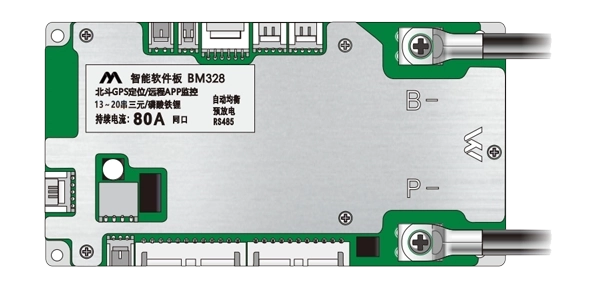
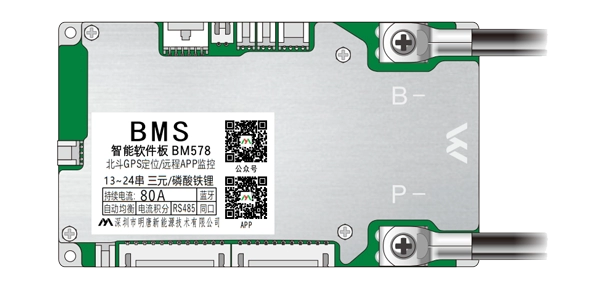
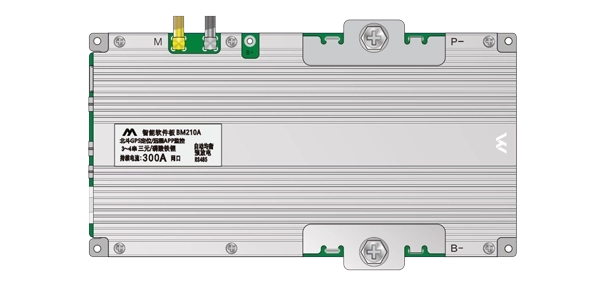
A low speed vehicle BMS is an electronic control system designed specifically to manage the battery pack used in low speed electric vehicles. Its primary purpose is to ensure safe operation, efficient energy usage, and consistent battery performance under various driving and environmental conditions.
Unlike generic battery protection circuits, a low speed vehicle BMS operates as a complete management platform. It continuously monitors battery parameters, controls charge and discharge processes, and communicates with other vehicle systems such as motor controllers and chargers.
Because low speed vehicles often operate for long periods at moderate loads, the BMS must focus on stability, accuracy, and durability rather than extreme power output.
The Role of a Low Speed Vehicle BMS in Electric Vehicle Systems
Battery Protection and Safety Control
One of the most critical roles of a low speed vehicle BMS is protecting the battery pack from unsafe operating conditions. This includes preventing overcharge, over-discharge, overcurrent, and abnormal temperature events.
By enforcing safe operating limits, the BMS reduces the risk of battery damage, system failure, or safety incidents.
Energy Management and Efficiency
A low speed vehicle BMS optimizes how energy is delivered from the battery to the vehicle. It ensures balanced discharge across cells and manages energy flow to improve driving range and battery utilization.
Efficient energy management is especially important for vehicles used in daily operations with predictable but extended duty cycles.
System Monitoring and Diagnostics
Continuous monitoring allows the BMS to detect abnormal conditions early. Fault detection and diagnostic data support maintenance planning and reduce unexpected downtime.
This monitoring capability is a key advantage of a well-designed low speed vehicle BMS.
Typical Battery Configurations in Low Speed Vehicles
Common Battery Chemistries
Low speed vehicles commonly use lithium iron phosphate (LiFePO₄), lithium-ion, or in some cases lead-acid battery systems. Each chemistry has specific voltage, current, and temperature characteristics.
A low speed vehicle BMS must be configured to match the selected battery chemistry precisely to ensure accurate monitoring and protection.
Series and Parallel Cell Arrangements
Battery packs are typically composed of multiple cells connected in series and parallel to achieve required voltage and capacity. The BMS monitors each series cell or module to maintain balance and stability.
Accurate cell-level monitoring is essential for maintaining consistent performance across the entire pack.
Core Functions of a Low Speed Vehicle BMS
Voltage Monitoring and Control
The BMS continuously measures the voltage of individual cells and the total pack voltage. This data is used to prevent overcharging and deep discharging, both of which can shorten battery life.
Voltage accuracy directly impacts system reliability and protection effectiveness.
Current Measurement and Limiting
Current sensors allow the low speed vehicle BMS to track charge and discharge currents in real time. When current exceeds safe limits, the system can reduce power output or disconnect the battery to prevent damage.
This function is especially important during acceleration, hill climbing, or regenerative braking.
Temperature Monitoring and Thermal Protection
Temperature sensors placed on cells or modules provide critical data for thermal management. The BMS uses this information to limit operation when temperatures exceed safe thresholds.
Thermal protection ensures stable operation in various climates and operating environments.
Cell Balancing Management
Cell balancing is a key function of a low speed vehicle BMS. Over time, individual cells may drift in voltage due to manufacturing differences or operating conditions.
The BMS balances cells to maintain uniform voltage levels, improving pack efficiency and extending service life.
Hardware Architecture of a Low Speed Vehicle BMS
Control Unit and Microcontroller
At the core of the BMS is a microcontroller or control unit that processes sensor data and executes protection logic. This unit coordinates all monitoring and control functions.
The reliability of this control unit directly affects system stability.
Sensor and Measurement Circuits
Voltage, current, and temperature sensors provide real-time data to the BMS. High-quality measurement circuits ensure accuracy and noise resistance.
Accurate sensing is critical for correct decision-making within the BMS.
Power Switching Components
Contactors or MOSFETs are used to control battery connection and disconnection. The low speed vehicle BMS uses these components to isolate the battery during fault conditions.
Proper selection of power components ensures safe and reliable switching behavior.
Software Logic and Control Strategies
Protection Algorithms
The BMS software implements protection algorithms that define safe operating limits. These algorithms continuously evaluate sensor data and trigger protective actions when necessary.
Well-designed logic avoids false alarms while maintaining strict safety margins.
State of Charge (SOC) Estimation
SOC estimation provides information about remaining battery capacity. Accurate SOC data supports driving range prediction and energy management.
A low speed vehicle BMS typically combines current integration and voltage-based methods to improve SOC accuracy.
State of Health (SOH) Monitoring
SOH estimation evaluates battery aging and performance degradation. This information supports maintenance planning and system diagnostics.
Long-term monitoring is particularly valuable in fleet or commercial vehicle applications.
Communication Interfaces and System Integration
CAN Bus Communication
Most low speed vehicle BMS solutions use CAN bus communication to exchange data with motor controllers, displays, and chargers. This enables coordinated system control and real-time status reporting.
CAN communication improves system integration and operational transparency.
Charger and Motor Controller Interaction
The BMS communicates with chargers to control charging current and voltage limits. It also interacts with motor controllers to regulate power output based on battery conditions.
This coordination ensures safe and efficient vehicle operation.
User Interface and Data Access
Some systems provide interfaces for diagnostics, configuration, and data logging. These features support service personnel and system integrators.
Applications of Low Speed Vehicle BMS Solutions
Neighborhood Electric Vehicles
In residential and campus environments, low speed vehicle BMS systems support stable daily transportation with minimal maintenance requirements.
Industrial and Utility Vehicles
Industrial electric carts and service vehicles rely on BMS systems for reliable operation in continuous or repetitive duty cycles.
Commercial Fleet Operations
Fleet operators benefit from consistent performance, predictable maintenance, and diagnostic visibility provided by a robust low speed vehicle BMS.
Safety and Reliability Considerations
Electrical Isolation and Fault Handling
The BMS must isolate the battery safely during faults such as short circuits or insulation failures. Fast response times reduce risk and prevent system damage.
Redundancy and Fail-Safe Design
Fail-safe strategies ensure that the system enters a safe state when abnormal conditions are detected. This is especially important in vehicles carrying passengers or operating in public areas.
Environmental Protection
Low speed vehicle BMS units are often exposed to vibration, humidity, and temperature variation. Enclosure design and component selection must support reliable operation under these conditions.
Key Factors When Selecting a Low Speed Vehicle BMS
Battery Chemistry Compatibility
The BMS must be designed and configured specifically for the battery chemistry used. Incorrect configuration can compromise safety and performance.
Voltage and Current Ratings
Proper matching of voltage and current ratings ensures that the BMS can handle real operating conditions without stress.
Functional Requirements
Different vehicles may require features such as regenerative braking support, external communication, or data logging. Selecting a BMS with appropriate functionality is critical.
Supplier Technical Support
Reliable technical documentation, configuration support, and after-sales service add significant value in BMS projects.
Installation and Commissioning Considerations
Wiring and Sensor Placement
Correct wiring and sensor placement are essential for accurate measurement and protection. Installation guidelines should be followed strictly.
System Configuration and Calibration
Initial configuration ensures that voltage thresholds, current limits, and temperature settings match the battery pack and vehicle requirements.
Functional Testing
Before vehicle deployment, functional testing verifies correct BMS operation under various conditions.
Operation and Maintenance Best Practices
Regular System Checks
Periodic inspection of connections, sensors, and communication interfaces helps maintain system reliability.
Firmware Updates
When applicable, firmware updates can improve functionality or address known issues without hardware changes.
Data Review and Diagnostics
Reviewing operational data supports proactive maintenance and performance optimization.
Conclusion
A low speed vehicle BMS is a critical system that ensures safe battery operation, efficient energy management, and reliable vehicle performance. By monitoring key parameters, enforcing protection strategies, and coordinating with other vehicle systems, it forms the backbone of modern low speed electric mobility.
For manufacturers, integrators, and distributors, understanding the structure and function of low speed vehicle BMS solutions enables better system design and product selection. When properly implemented, a high-quality BMS not only protects the battery but also enhances overall vehicle reliability and user confidence.