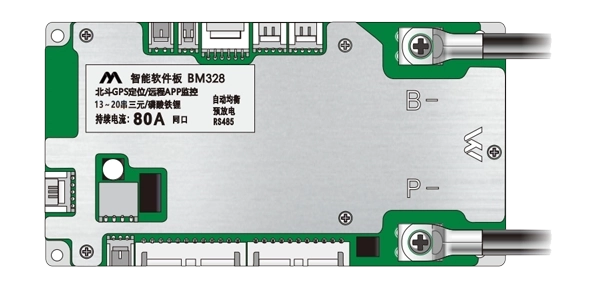
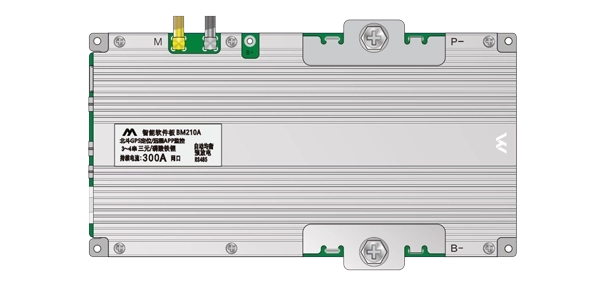
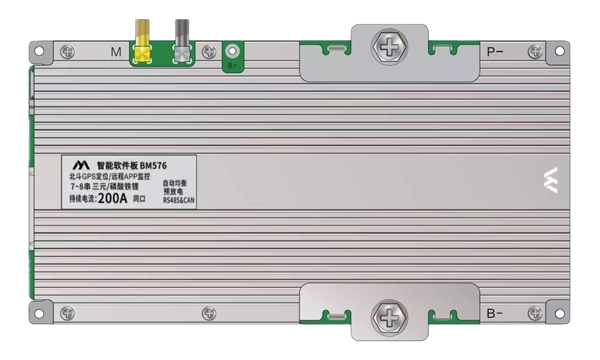
Electric golf carts rely heavily on battery systems to deliver stable performance, predictable range, and long service life. At the center of modern battery systems lies a critical control unit known as the golf cart BMS (Battery Management System). This system acts as the “brain” of the battery pack, continuously monitoring, controlling, and protecting battery operation under various working conditions.
As golf carts increasingly transition from traditional lead-acid batteries to lithium-based battery solutions, the role of the golf cart BMS becomes even more important. Lithium batteries require precise control of voltage, current, and temperature, making a well-designed BMS essential for daily operation, charging, and system reliability.
This article provides an in-depth technical explanation of golf cart BMS systems, covering their structure, working principles, key components, control strategies, integration with golf cart electronics, and practical considerations for installation and maintenance.
What Is a Golf Cart BMS?
A golf cart BMS is an electronic control system designed specifically to manage rechargeable battery packs used in electric golf carts. Its primary role is to ensure that each battery cell operates within predefined electrical and thermal limits while coordinating with chargers, controllers, and vehicle systems.
In lithium-powered golf carts, the BMS is typically integrated inside the battery pack or mounted externally as a centralized control module. It continuously collects data from multiple sensors and executes control logic in real time to maintain safe and stable battery operation.
Unlike generic battery protection circuits, a golf cart BMS is tailored to the unique operating characteristics of golf carts, including intermittent driving patterns, frequent stop-and-go usage, extended idle periods, and outdoor environmental exposure.
Core Functions of a Golf Cart BMS
A golf cart BMS performs several essential functions that support battery operation throughout the entire usage cycle.
Voltage Monitoring and Control
One of the most fundamental functions of a golf cart BMS is real-time voltage monitoring. The system measures:
By monitoring voltage at the cell level, the BMS ensures that no cell exceeds its upper or lower voltage thresholds. This is particularly important in lithium battery packs, where cell imbalance can lead to reduced performance or operational faults.
When abnormal voltage conditions are detected, the golf cart BMS can trigger protective actions such as disconnecting the load or stopping the charging process.
Current Measurement and Regulation
Current flow in a golf cart varies significantly depending on driving conditions, terrain, payload, and acceleration. The golf cart BMS continuously measures charge and discharge current using precision shunt resistors or Hall-effect sensors.
This current data allows the BMS to:
Detect overcurrent situations
Manage regenerative charging (if applicable)
Coordinate with motor controllers and chargers
Calculate energy usage and remaining capacity
Accurate current measurement is also essential for calculating state of charge (SOC), which directly affects range estimation and battery usage planning.
Temperature Detection and Thermal Management Logic
Temperature has a direct impact on battery behavior and safety. A golf cart BMS uses multiple temperature sensors placed at critical locations within the battery pack, such as:
Cell surfaces
Module connectors
Power terminals
The BMS monitors these temperature readings to ensure operation remains within defined thermal limits. If temperatures exceed or fall below allowable ranges, the system can restrict current flow, pause charging, or initiate protective shutdowns.
While the BMS does not physically cool or heat the battery, it plays a central role in thermal decision-making and system-level coordination.
Cell Balancing in Golf Cart BMS Systems
Cell balancing is a key function that distinguishes a full-featured golf cart BMS from basic protection circuits.
Passive Cell Balancing
Most golf cart BMS designs use passive balancing methods. This involves dissipating excess energy from higher-voltage cells through resistors, allowing lower-voltage cells to catch up during charging.
Passive balancing typically occurs near the top of the charge cycle and helps maintain voltage consistency across cells over time.
Active Cell Balancing (Advanced Systems)
Some higher-capacity or commercial golf cart applications may use active balancing, where energy is redistributed between cells rather than dissipated as heat.
While more complex, active balancing can improve overall pack consistency and is managed entirely by the golf cart BMS control logic.
Key Components of a Golf Cart BMS
Understanding the internal components of a golf cart BMS provides insight into how the system operates at a hardware level.
BMS Control Unit (MCU)
The microcontroller unit (MCU) is the processing core of the golf cart BMS. It executes firmware algorithms that analyze sensor data, make control decisions, and communicate with external systems.
The MCU is responsible for:
Data sampling and filtering
Fault detection
Protection logic execution
Communication protocol management
Voltage and Temperature Sensors
Voltage sensing circuits connect to each cell or cell group, while temperature sensors (usually NTC thermistors) provide real-time thermal feedback.
These sensors form the primary data input layer for the golf cart BMS.
Power Switching Devices
MOSFETs or relays are used by the BMS to control current flow during charging and discharging. These components act as electronic switches that enable or interrupt power paths based on BMS commands.
Communication Interfaces
Modern golf cart BMS systems often support communication protocols such as:
These interfaces allow the BMS to exchange data with chargers, displays, motor controllers, or fleet management systems.
Integration of Golf Cart BMS with Vehicle Systems
A golf cart BMS does not operate in isolation. It interacts closely with other electronic systems in the vehicle.
Charger Communication
The BMS communicates charging parameters to the charger, including:
Maximum charge voltage
Allowed charge current
Temperature-based limits
This coordination ensures charging behavior aligns with battery conditions in real time.
Motor Controller Coordination
During driving, the golf cart BMS provides current and voltage limits to the motor controller. If abnormal conditions are detected, the BMS can request reduced power output or initiate a controlled shutdown.
Display and Monitoring Systems
Many golf carts feature dashboards or monitoring screens that display battery information. The golf cart BMS supplies data such as:
State of charge (SOC)
Pack voltage
Fault status
This information helps operators understand battery condition during use.
State Estimation in Golf Cart BMS
Accurate battery state estimation is a core responsibility of the golf cart BMS.
State of Charge (SOC) Calculation
SOC represents the remaining capacity of the battery as a percentage. Golf cart BMS systems typically calculate SOC using a combination of:
Coulomb counting
Voltage correlation
Temperature compensation
Because golf carts experience variable loads, SOC algorithms must account for dynamic current changes and resting periods.
State of Health (SOH) Evaluation
Some advanced golf cart BMS systems estimate battery health by tracking:
SOH data supports maintenance planning and system diagnostics.
Installation Considerations for Golf Cart BMS
Proper installation is essential for reliable BMS operation.
Electrical Connections
All sense wires, power cables, and communication lines must be installed according to design specifications. Incorrect wiring can lead to inaccurate measurements or system faults.
Mechanical Placement
The golf cart BMS should be mounted in a location that minimizes exposure to vibration, moisture, and extreme temperatures while allowing adequate airflow.
Firmware Configuration
Many golf cart BMS units require parameter configuration during installation, including voltage thresholds, current limits, and temperature settings tailored to the specific battery chemistry.
Maintenance and Diagnostics of Golf Cart BMS Systems
Although the BMS is largely maintenance-free, periodic checks are recommended.
Data Review and Fault Logs
Most golf cart BMS systems store fault records and operational data. Reviewing these logs can help identify abnormal patterns or installation issues.
Sensor Verification
Temperature and voltage sensors should be checked during maintenance to ensure accurate readings and proper attachment.
Firmware Updates
Manufacturers may release firmware updates to improve control logic or compatibility. Updating BMS firmware should follow approved procedures to avoid configuration errors.
Common Technical Issues Addressed by Golf Cart BMS
A well-designed golf cart BMS is engineered to detect and manage technical irregularities such as:
By identifying these conditions early, the BMS supports stable battery operation throughout daily use.
Conclusion
The golf cart BMS plays a central role in managing battery behavior, coordinating system communication, and maintaining operational stability in electric golf carts. From voltage monitoring and current regulation to cell balancing and system integration, the BMS acts as the control foundation of modern lithium battery solutions.
Understanding how a golf cart BMS works—from its internal components to its interaction with chargers and motor controllers—provides valuable insight for manufacturers, integrators, and technical buyers seeking reliable battery system performance.