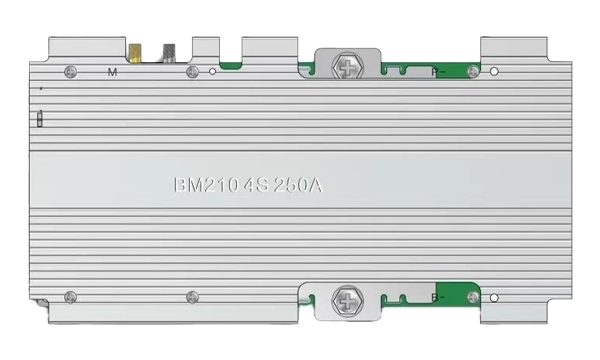
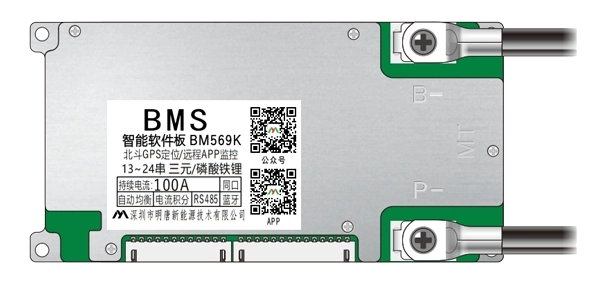
In modern recreational vehicles, electrical systems are no longer limited to basic lighting and auxiliary power. RVs now rely on complex energy storage solutions to support refrigerators, HVAC systems, inverters, control panels, and onboard electronics. As battery capacity increases and lithium-based chemistries become more common, effective battery supervision becomes a technical necessity rather than an optional feature.
This is where the RV BMS plays a critical role. A Recreational Vehicle Battery Management System acts as the central control and monitoring unit for the RV battery pack, continuously collecting electrical and thermal data while enforcing predefined operating limits. Without an RV BMS, the battery system would operate blindly, lacking the ability to respond to abnormal conditions in real time.
This article provides a detailed technical explanation of RV BMS systems, focusing on structure, operating logic, system coordination, and maintenance considerations. The content is written for readers who require a deeper understanding of RV BMS design and behavior rather than surface-level descriptions.
What Is an RV BMS?
An RV BMS is an embedded electronic system designed specifically to manage rechargeable battery packs used in recreational vehicles. It functions as both a monitoring platform and a control authority, ensuring that the battery operates within safe electrical and thermal boundaries at all times.
Unlike generic battery protection boards, an RV BMS must adapt to the dynamic operating environment of an RV. Battery usage patterns in recreational vehicles are highly variable, influenced by driving conditions, campsite power availability, solar charging, and fluctuating onboard loads. The RV BMS continuously interprets these changes and adjusts its control behavior accordingly.
From a system perspective, the RV BMS acts as an intermediary between the battery cells and the rest of the RV electrical system, regulating energy flow while maintaining consistent battery behavior.
Core Functions of an RV BMS
The functionality of an RV BMS is defined by a collection of interdependent monitoring and control processes. Each function contributes to the overall stability of the battery system.
Voltage Monitoring
Voltage monitoring is performed at the individual cell or cell-group level. The RV BMS continuously samples voltage data to detect deviations that may indicate imbalance, overcharge, or excessive discharge. This data forms the basis for protective decisions and state calculations.
Accurate voltage measurement is especially important in multi-cell battery packs, where small variations between cells can accumulate over time if left unmanaged.
Current Measurement
Current sensing allows the RV BMS to track energy flow into and out of the battery. By measuring real-time charge and discharge current, the system can detect abnormal conditions such as excessive load demand or unintended current spikes.
Current data is also essential for calculating cumulative energy usage and estimating remaining capacity.
Temperature Detection
Thermal monitoring ensures that the battery operates within defined temperature ranges. Sensors are typically placed near critical components or directly on cell surfaces. The RV BMS uses this information to regulate charging and discharging behavior in response to thermal conditions.
Temperature data also supports long-term diagnostic analysis and system calibration.
State Calculation
Using combined voltage, current, and temperature inputs, the RV BMS calculates operational states such as SOC and SOH. These calculated values provide a high-level view of battery condition and are often shared with external systems.
Internal Architecture of an RV BMS
The internal structure of an RV BMS is designed to ensure reliable operation under continuous load and environmental stress.
Sensing Layer
The sensing layer serves as the data acquisition interface. Precision voltage taps, current sensors, and thermal probes feed raw measurements into the control unit. Signal integrity and noise suppression are key considerations at this level.
Control Unit (MCU)
The MCU executes firmware algorithms that interpret sensor data, apply logic rules, and coordinate system responses. The reliability of an RV BMS largely depends on the stability and accuracy of its firmware design.
Protection Circuitry
Protection circuitry provides physical enforcement of safety decisions. High-current MOSFETs or contactors disconnect the battery when conditions exceed safe limits. These components are selected based on RV system voltage and current requirements.
Communication Interface
Communication modules enable the RV BMS to exchange data with chargers, inverters, and monitoring displays. This connectivity allows for coordinated system-level control.
Battery Cell Management in RV BMS Systems
Battery packs in RVs are composed of multiple cells arranged in series and parallel. Managing these cells uniformly is a core responsibility of the RV BMS.
Cell Balancing Mechanisms
Cell balancing prevents voltage divergence between cells. Passive balancing dissipates excess energy from higher-voltage cells, while active balancing redistributes energy between cells. The RV BMS determines when and how balancing occurs based on voltage thresholds and timing logic.
Cell Group Configuration
RV BMS systems must be configured to match the exact series and parallel structure of the battery pack. Incorrect configuration can result in inaccurate monitoring or unintended protection triggers.
Charging Control Logic in RV BMS
Charging control in RV systems requires adaptability due to multiple power sources and operating scenarios.
Charge Permission Logic
The RV BMS evaluates multiple parameters before allowing charging to proceed. Voltage, temperature, and current data are assessed in real time to determine whether charging conditions are acceptable.
Coordination with External Chargers
Through communication protocols, the RV BMS can influence charger behavior by providing real-time battery status. This coordination improves system-level consistency.
Charge Termination Criteria
Charging is terminated based on defined voltage limits, current tapering behavior, or temperature thresholds. The RV BMS enforces these criteria to maintain controlled charging behavior.
Discharge Management and Load Control
Discharge behavior directly impacts RV electrical performance and system stability.
Overcurrent Detection
The RV BMS monitors discharge current to detect overload conditions. When thresholds are exceeded, protective disconnection is triggered.
Low-Voltage Cutoff
Low-voltage cutoff prevents excessive depletion. This function is essential for maintaining predictable battery behavior during extended load usage.
Load Recovery Logic
Once conditions normalize, the RV BMS manages the reconnection process to restore system operation.
Communication Protocols Used in RV BMS
Digital communication enables coordinated operation between the RV BMS and other electrical components.
CAN Bus Communication
CAN bus provides robust, noise-resistant data exchange suitable for mobile environments. Many RV BMS systems use CAN to transmit battery parameters.
UART and RS485
Simpler communication interfaces are often used for displays or localized monitoring solutions.
Data Parameters Shared
The RV BMS typically transmits voltage, current, temperature, SOC, and fault status data.
RV BMS Safety Protection Logic
Safety logic is implemented across hardware and firmware layers.
Hardware-Level Protection
Independent hardware safeguards provide immediate response to critical faults.
Firmware-Based Decision Making
Firmware logic defines thresholds, delays, and recovery conditions, allowing flexible system behavior.
Fault Logging
Fault records support diagnostics and long-term system evaluation.
Installation Considerations for RV BMS
Correct installation ensures accurate monitoring and reliable protection.
Electrical Connections
Proper sequencing and secure connections are essential for voltage sensing accuracy.
Thermal Placement
Sensor placement directly affects temperature data reliability.
Grounding and Isolation
Effective grounding reduces noise and measurement error.
Configuration and Calibration of RV BMS
Configuration aligns the RV BMS with the specific battery system.
Parameter Setup
Thresholds and communication settings are defined during setup.
Initial Calibration
Calibration aligns measured values with actual battery behavior.
Firmware Updates
Firmware updates allow optimization and compatibility improvements.
Maintenance and Diagnostics of RV BMS Systems
Regular inspection supports long-term reliability.
Routine Data Review
Trend analysis helps identify early deviations.
Alarm Interpretation
Understanding alarms enables effective response.
Component Inspection
Physical inspection ensures system integrity.
Common RV BMS Terminology Explained
Clear terminology improves technical understanding.
SOC: Remaining usable capacity
SOH: Battery condition indicator
Cutoff Voltage: Protection threshold
Balancing Current: Equalization current
Conclusion
The RV BMS operates as the technical backbone of an RV battery system, coordinating monitoring, control, and protection functions through a tightly integrated architecture. By managing voltage, current, temperature, and communication, the RV BMS enables stable and predictable battery operation across diverse RV electrical scenarios.