Battery systems are widely used in energy storage, electric mobility, telecommunications infrastructure, and industrial power systems. As the scale and complexity of battery installations increase, managing large numbers of battery packs and monitoring their operating data becomes more demanding. Traditional battery management systems mainly operate locally within battery packs, focusing on real-time monitoring and protection of individual cells.
A cloud BMS (cloud battery management system) extends the functionality of traditional battery management systems by connecting local BMS devices to cloud platforms through network communication. With this architecture, battery data from multiple locations can be collected, stored, and processed within centralized cloud servers. Engineers and system operators can access battery status remotely through web platforms or management software.
In practical applications, a cloud BMS acts as the upper-level management platform of the battery management system, integrating data acquisition devices, communication networks, cloud computing infrastructure, and monitoring interfaces. This article provides a detailed overview of the structure, architecture, communication mechanisms, and data processing processes involved in a cloud BMS.
Understanding the Concept of Cloud BMS
A cloud BMS is a network-based management platform designed to monitor and manage battery systems through cloud computing infrastructure. Instead of operating only within individual battery packs, the system connects distributed battery monitoring units with centralized servers through communication networks.
In a typical deployment, a cloud BMS integrates multiple layers of hardware and software components. These layers include battery monitoring hardware, communication gateways, data transmission networks, cloud servers, and application-level monitoring platforms.
The main purpose of a cloud BMS is to collect operational data generated by battery packs and transmit that data to cloud servers where it can be stored and processed. Once the data is available in the cloud platform, engineers can analyze battery parameters and monitor operating conditions through graphical interfaces or remote management software.
Because many modern energy storage and battery systems are distributed across multiple locations, a cloud BMS allows centralized supervision of large numbers of battery installations simultaneously.
Overall Architecture of a Cloud BMS
The architecture of a cloud BMS typically follows a multi-layer structure that separates battery hardware, communication systems, and cloud software platforms. Each layer is responsible for a specific function within the overall system.
Battery Layer
The battery layer represents the physical battery cells, modules, and packs installed within the system. These battery components form the foundation of the entire cloud BMS architecture.
Sensors embedded within the battery pack measure key operational parameters such as:
These measurements provide the raw data required for monitoring battery behavior.
The sensors continuously collect information during battery operation, allowing the system to track the electrical and thermal conditions of the battery pack.
Device Control Layer
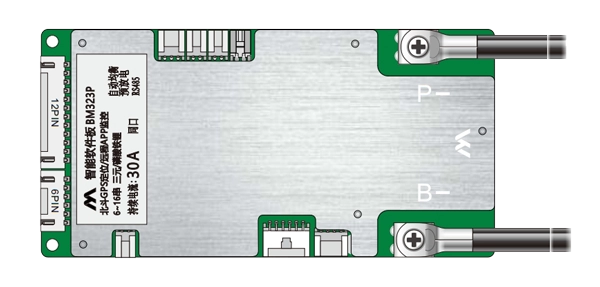
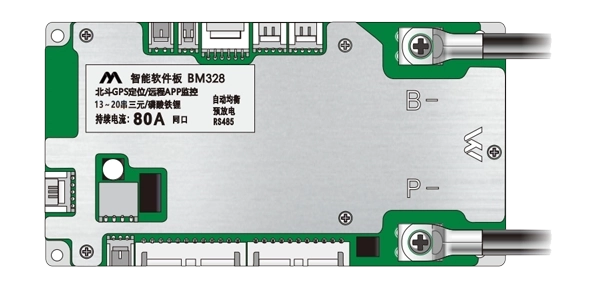
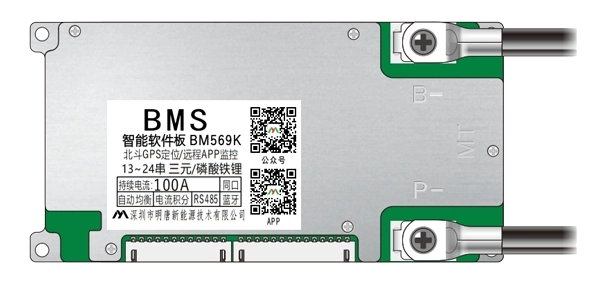
The device control layer contains the hardware battery management units installed inside battery packs. These devices are responsible for monitoring battery cells and managing internal system operations.
Typical components in this layer include:
The microcontroller processes sensor signals and organizes the data into structured communication frames. These data frames contain battery measurement values that will later be transmitted to higher levels of the cloud BMS platform.
This layer performs real-time monitoring functions and ensures that accurate battery data is collected before it is sent to the cloud infrastructure.
Communication Layer in Cloud BMS Systems
The communication layer enables the transfer of battery data from local monitoring devices to cloud servers. Without reliable communication channels, the cloud BMS platform cannot receive or process battery information.
In many battery systems, local BMS devices communicate with gateway devices that collect data from multiple battery packs. The gateway then forwards this aggregated data to cloud servers through internet-based communication networks.
Several communication technologies can be used in a cloud BMS, including:
CAN bus networks
RS485 industrial communication
Ethernet networks
Cellular communication modules
Wireless communication interfaces
The communication layer ensures that battery operating data can be transmitted from distributed battery installations to centralized cloud platforms.
Data transmission intervals may vary depending on system design. Some systems transmit data continuously, while others send data at periodic intervals or when specific events occur.
Cloud Platform Layer
The cloud platform layer serves as the central data processing environment of the cloud BMS architecture. It is responsible for receiving battery data, storing the information in databases, and performing data analysis.
When battery monitoring devices send data to the cloud platform, the information is first received by cloud servers through network communication interfaces. The servers then process the incoming data packets and store them in structured databases.
The cloud infrastructure typically includes:
These components allow the cloud BMS to handle large amounts of battery data generated by many devices simultaneously.
The centralized cloud platform also allows battery data to be accessed from different locations through secure network connections.
Application Layer and Monitoring Interface
The application layer is the part of the cloud BMS system that users interact with directly. It provides graphical interfaces and monitoring dashboards that display battery information in an organized format.
Users can access the platform through web-based applications or specialized monitoring software. The interface displays operational information such as battery voltage, current, temperature, and system status.
Monitoring dashboards may present data in the form of charts, tables, and real-time indicators. These visualization tools help engineers observe the operational state of battery systems across multiple installations.
In addition to monitoring, the application layer may also include system configuration tools that allow administrators to manage device settings and communication parameters within the cloud BMS platform.
Core Functional Modules of a Cloud BMS
A cloud BMS platform includes several internal software modules that manage battery data and system operations.
Data Acquisition Module
The data acquisition module collects information transmitted by battery monitoring devices. Local BMS hardware periodically sends measurement data to the cloud platform through communication networks.
This module receives the incoming data packets and organizes them into structured datasets.
Typical data collected by a cloud BMS includes voltage measurements, current readings, temperature values, and device status indicators.
Data Storage Module
Battery monitoring systems generate large volumes of data during operation. The cloud BMS storage module manages databases that store both real-time measurements and historical operational records.
Structured data storage allows engineers to retrieve battery information for analysis and system monitoring.
Historical data can also be used to observe long-term battery operating patterns.
Data Processing Module
After data is stored in the system, the processing module analyzes the incoming measurements and converts them into operational indicators.
The cloud BMS processing module interprets raw sensor data and generates structured battery performance information.
For example, the system may process:
Voltage distribution across battery cells
Current flow patterns within battery packs
Temperature distribution within modules
These calculations allow engineers to evaluate the operational status of battery systems.
System Monitoring Module
The monitoring module continuously tracks the operating condition of connected battery systems.
Through this module, the cloud BMS platform displays real-time battery parameters and system status indicators.
The monitoring interface updates automatically as new data arrives from battery devices.
Device Management Module
The device management module maintains records of all monitoring devices connected to the cloud BMS network.
Each battery management unit is registered within the system database along with its device identification information and communication status.
Administrators can organize devices into groups and manage system configuration through this module.
Data Flow Mechanism in a Cloud BMS
The data flow within a cloud BMS follows a structured transmission path from battery sensors to cloud monitoring platforms.
Data Collection at Battery Level
Sensors installed within the battery pack measure electrical and thermal parameters during battery operation.
These signals are converted into digital values through analog-to-digital converters in the local BMS hardware.
Data Processing in Local BMS
The microcontroller within the battery management hardware processes the sensor data and organizes it into communication frames.
Each frame contains measurement data and device identification information.
Data Transmission to the Cloud
The communication module transmits the data frames to cloud servers using wired or wireless network connections.
Depending on the system design, this transmission may occur periodically or when triggered by system events.
Data Processing and Visualization
Once the data reaches the cloud platform, the cloud BMS servers process the information and store it in databases.
The processed data is then displayed on monitoring dashboards where engineers can observe system status in real time.
Communication Protocols Used in Cloud BMS
Reliable communication protocols are essential for ensuring accurate data transmission within a cloud BMS platform.
CAN Bus Communication
Controller Area Network (CAN) is widely used within battery packs to enable communication between cell monitoring circuits and control units.
RS485 Communication
RS485 communication is commonly used in industrial environments where multiple battery modules need to be connected over long distances.
TCP/IP Communication
TCP/IP protocols allow gateway devices to transmit battery data to cloud servers through internet connections.
MQTT Communication
MQTT is a lightweight messaging protocol designed for network-connected devices. Many cloud BMS platforms use MQTT to exchange real-time data between devices and cloud servers.
Security and Access Management in Cloud BMS Platforms
Security is an important aspect of cloud BMS system architecture because the platform manages network-connected battery systems.
Authentication mechanisms verify the identity of devices and users connecting to the platform. Data encryption may also be used to protect information transmitted across communication networks.
Access control systems allow administrators to assign different permission levels to system users. These permissions determine which devices or datasets each user can access within the cloud BMS platform.
Integration of Cloud BMS with Energy Storage Systems
A cloud BMS is commonly integrated with large battery energy storage systems where centralized monitoring of multiple battery installations is required.
Energy storage systems often consist of many battery racks and modules connected through monitoring hardware and communication networks.
The cloud BMS aggregates operational data from these distributed devices and organizes it within the centralized cloud platform.
System operators can then monitor battery installations across multiple locations through unified dashboards and monitoring interfaces.
Conclusion
A cloud BMS integrates battery monitoring hardware, communication infrastructure, and cloud computing platforms to create a centralized battery management environment. Through this architecture, operational data from battery systems can be collected, transmitted, stored, and analyzed within cloud-based platforms.
The system structure includes several layers, ranging from physical battery sensors and local monitoring hardware to communication networks, cloud servers, and user interface applications. Each layer plays an essential role in enabling remote monitoring and management of battery systems.
By organizing battery data through structured communication and centralized processing, a cloud BMS provides a scalable framework for managing distributed battery installations across modern energy and industrial systems.